Nagpur, 12 August: A landmark national study examining tuberculosis (TB) treatment practices in India's non-programmatic healthcare settings was published online in the Indian Journal of Tuberculosis on 30 July 2026. The study, titled "The PRAMAN India Study: First Systematic Review and Meta-Analysis of Anti-Tuberculosis Prescription Practices in Non-Programmatic Settings in India," is the first comprehensive national systematic review and meta-analysis to evaluate anti-TB prescribing practices outside India's National Tuberculosis Elimination Programme (NTEP). PRAMAN stands for Prescription Review and Meta-analysis of Anti-tuberculosis treatment in Non-programmatic settings in India. The name is also inspired by the Sanskrit word Pramāṇa, meaning ‘proof,’ underscoring the study’s mission to generate rigorous scientific evidence for advancing tuberculosis care.
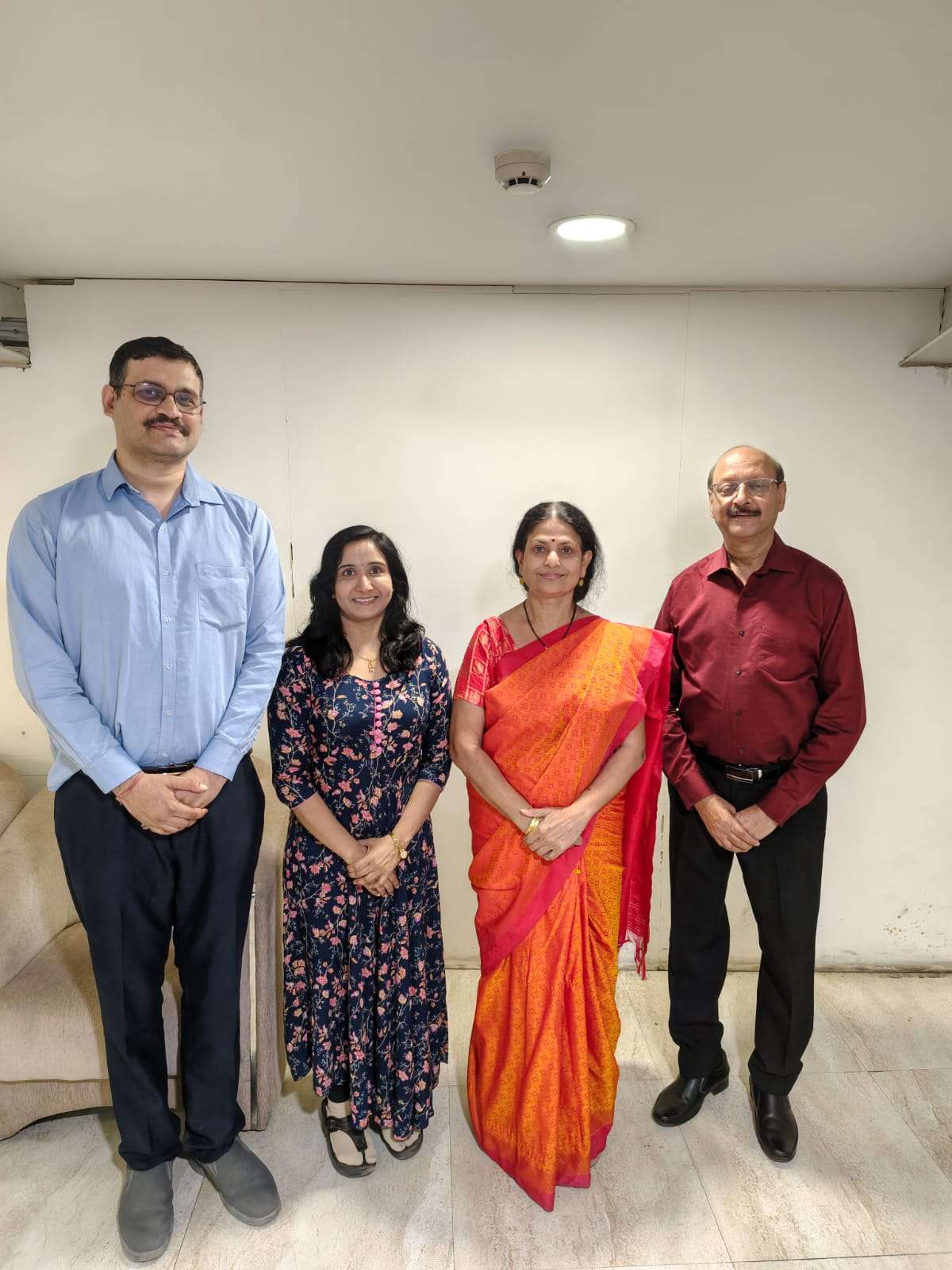
The study was led by Dr. Gyanshankar Mishra, Associate Professor, Department of Respiratory Medicine, Indira Gandhi Government Medical College (IGGMC), Nagpur, who served as the lead and corresponding author, in collaboration with Dr. Jasmin Mulani, Medical Officer, Health and Family Welfare Training Centre, Nagpur; Dr. Radha Munje, Professor and Head, Department of Respiratory Medicine, IGGMC, Nagpur; and Dr. Rupak Singla, Consultant and Former Head, Department of Tuberculosis and Respiratory Diseases, National Institute of Tuberculosis and Respiratory Diseases (NITRD), New Delhi as coauthors of the research study.
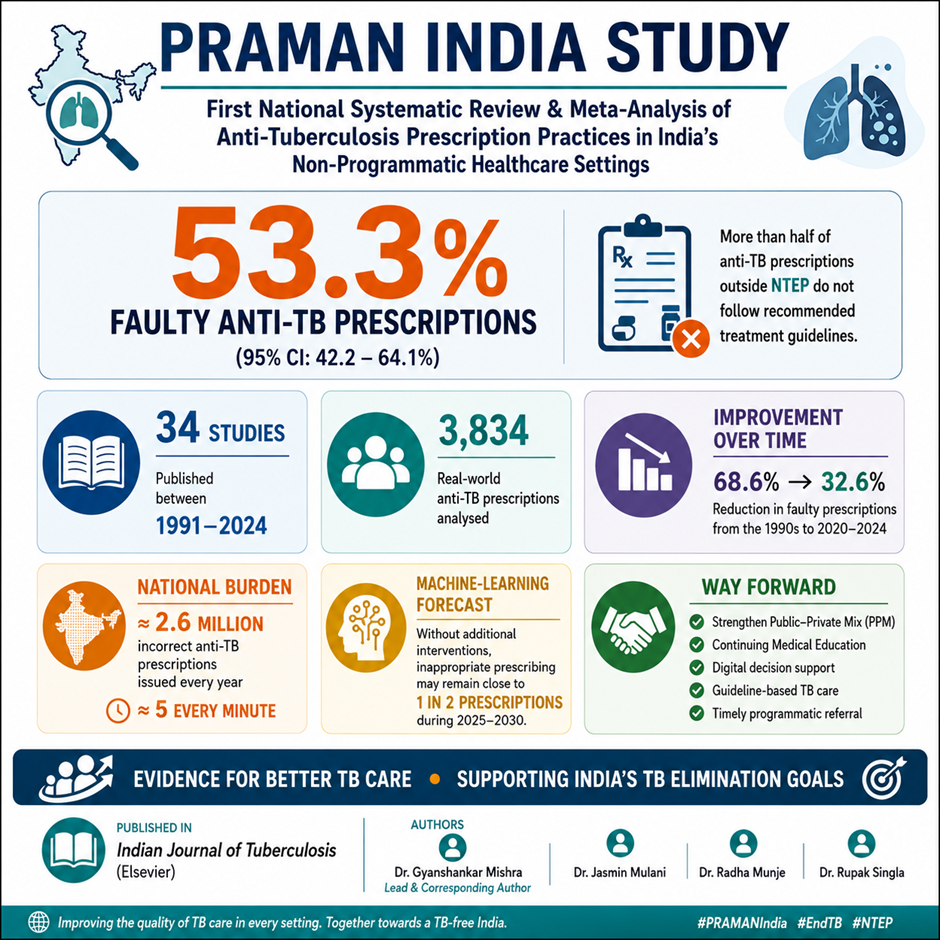
The PRAMAN India Study systematically analysed 34 Indian studies spanning more than three decades (1991–2024), involving 3,834 real-world anti-tuberculosis prescriptions. It is the first and largest national systematic review and meta-analysis evaluating anti-TB prescription practices in India's non-programmatic healthcare settings.
The study found that 53.3% of anti-TB prescriptions in non-programmatic healthcare settings were incorrect, indicating that nearly one in every two prescriptions was faulty Extrapolating from private-sector treatment volumes, the study estimates that approximately 2.6 million anti-TB prescriptions may be inappropriate annually in India's non-programmatic healthcare sector—roughly 5 prescriptions every minute. Encouragingly, the crude prevalence of faulty prescriptions declined from 68.6% during 1990–1999 to 32.6% during 2020–2024, reflecting substantial improvement over the past three decades. The study identified considerable variation in prescription practices across different regions of the country, suggesting that tailored interventions, continuous medical education, and stronger public-private collaboration will be essential to achieve uniform standards of TB care nationwide.
Commenting on the publication, Dr. Munje, Professor and Head, Department of Respiratory Medicine, IGGMC, Nagpur, said, " High-quality evidence is the foundation of better clinical practice and public health policy. The PRAMAN India Study fills an important knowledge gap by providing the first comprehensive national evidence on anti-tuberculosis prescribing practices outside the national programme. Its strong analytical approach offers critical insights into the urgent need to strengthen the quality of anti-TB prescribing and provides a robust platform for future quality improvement initiatives. In turn, these findings will complement the efforts of the NTEP and help prevent the emergence of acquired drug resistance.”
Importantly, the study also used machine-learning-based trend modelling to forecast future prescribing patterns. The analysis projected an inappropriate prescription rate of approximately 49.7% (±9.0%) during 2025–2030 if additional interventions are not implemented, underscoring the need for sustained efforts to improve adherence to national treatment guidelines.
Although prescribing practices have improved over the past three decades, the study observed that inappropriate prescribing remains widespread and continues to pose a challenge to India's TB elimination efforts. The authors recommend strengthening Public-Private Mix models, expanding continuing medical education, increasing use of digital decision-support tools, improving regulatory oversight, and promoting adherence to national treatment guidelines.
Dr. Singla, said, "Tuberculosis continues to be a major public health challenge in India. Strengthening the Public-Private Mix approach is the way forward to ensure uniform standards of TB care across the country. High-quality treatment in the non-programmatic sector is just as important as treatment delivered under the National programme, and closer integration between the two sectors will be essential for achieving India's TB elimination goals."
The study reinforces the importance of strengthening linkages between the private sector and the NTEP, with timely programmatic referral remaining the preferred approach to ensure standardized, guideline-based TB care for all TB patients.
Dr. Mishra, commented, "Three decades ago, the landmark study by Uplekar et al. in Mumbai highlighted the need for greater standardization in TB treatment practices across the non programmatic setting. Our own study from Nagpur in 2013, which forms part of this meta-analysis, also identified substantial gaps in prescribing practices. However, these were individual studies with relatively small sample sizes and limited geographical representation. The PRAMAN India Study is the first to bring together national evidence spanning more than three decades, encompassing prescribing practices of both allopathic and non-allopathic practitioners, to provide a comprehensive picture of TB treatment practices outside the national programme. Many prescribing gaps are likely to reflect evolving evidence, changing treatment guidelines, and variations in access to updated recommendations rather than deliberate deviation from standard practice. This highlights the importance of continuous medical education and timely dissemination of updated national guidelines. The encouraging decline in inappropriate prescriptions over the years reflects the positive impact of NTEP, wider availability of standardized treatment, and growing public-private collaboration. Building on this progress through sustained partnership, continuous medical education, and evidence-based clinical practice will be crucial to ensure that every TB patient, irrespective of where they seek care, receives standardized, guideline-based treatment."
Publication
Mishra G, Mulani J, Munje R, Singla R. The PRAMAN India Study: First Systematic Review and Meta-Analysis of Anti-Tuberculosis Prescription Practices in Non-Programmatic Settings in India. Indian Journal of Tuberculosis 2026. https://doi.org/10.1016/J.IJTB.2026.07.035.
Read the full article:
https://doi.org/10.1016/J.IJTB.2026.07.035
PRAMAN India Study – Official Project Website
Study methodology, findings, resources and dissemination activities:
https://sites.google.com/smpalmaarifaluelhok.my.id/pramanindiastudy/
Media Contact
pramanindiastudy@gmail.com